


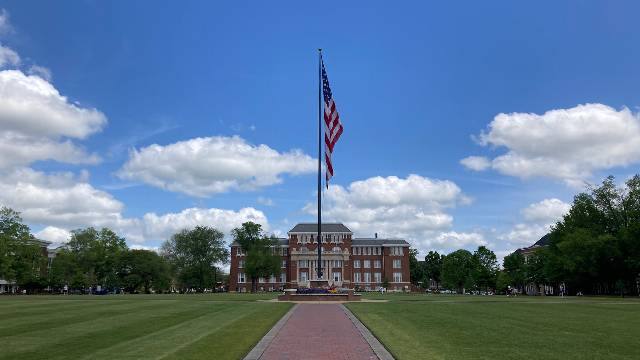
 Agricultural Autonomy Institute joins Harper Adams University's 125th anniversary celebrations
A leading American expert in agricultural autonomy has paid tribute to Harper Adams University as it marks its 125th anniversary.Dr Alex Tho …
Posted 22 October
Conservation Dogs visit Harper Adams
28 November 2017

Post by Sarah Cunningham, BSc Wildlife Conservation and Environmental Management
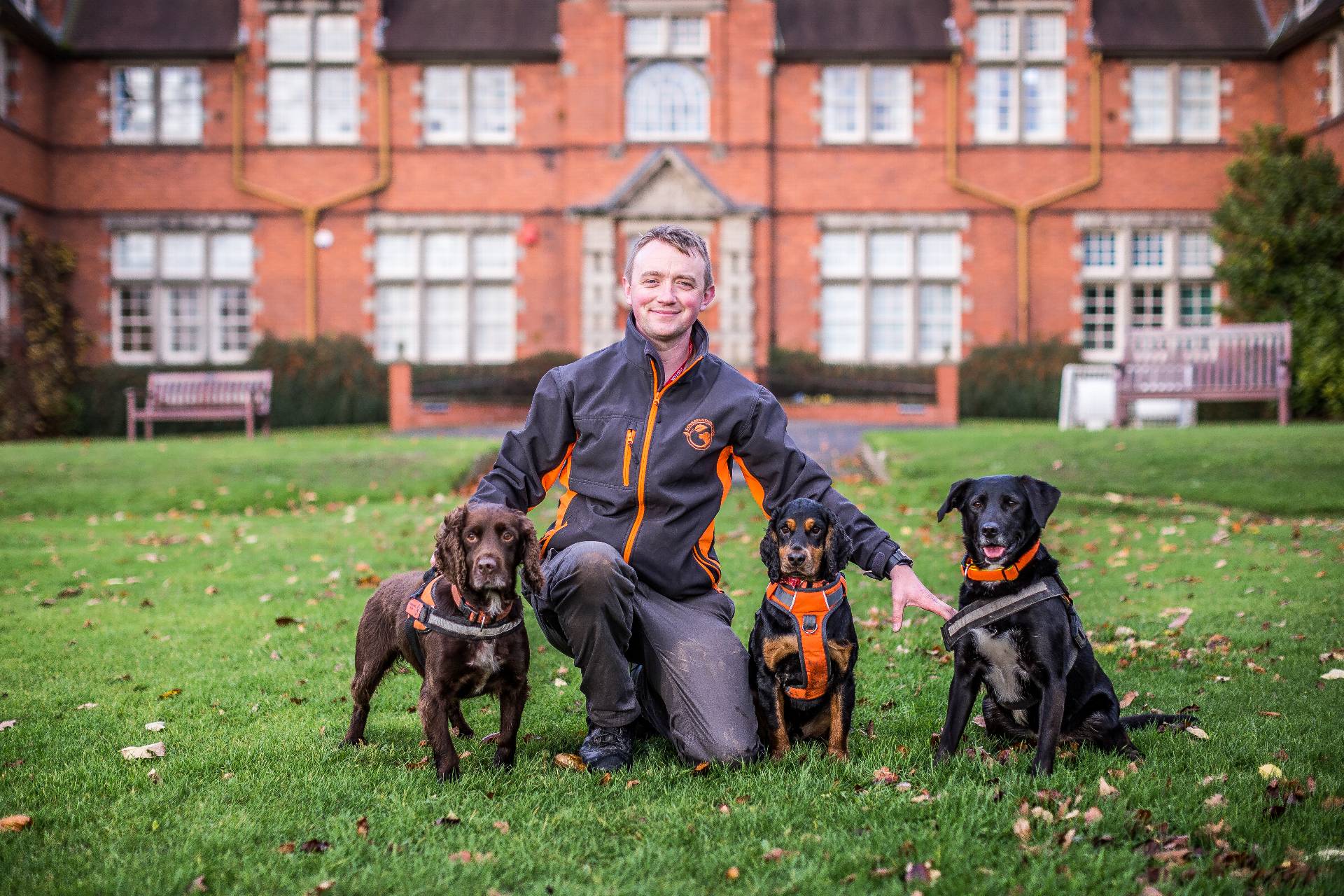
Harper Adams University’s Countryside, Environment and Wildlife students were visited by Conservation Dogs, a company that trains detection dogs, to demonstrate the skills of these curious canines.
It is well known that dogs have an incredible sense of smell and are able to sniff out illegal substances in, for example, an airport, but Conservation Dogs have trained up these pups to detect live animals like the Great Crested Newts. Wildlife surveyors could take hours to find a Great Crested Newt by sight but dogs, like Rocky the black/tan Cocker Spaniel, can find them in a matter of minutes by their scent.
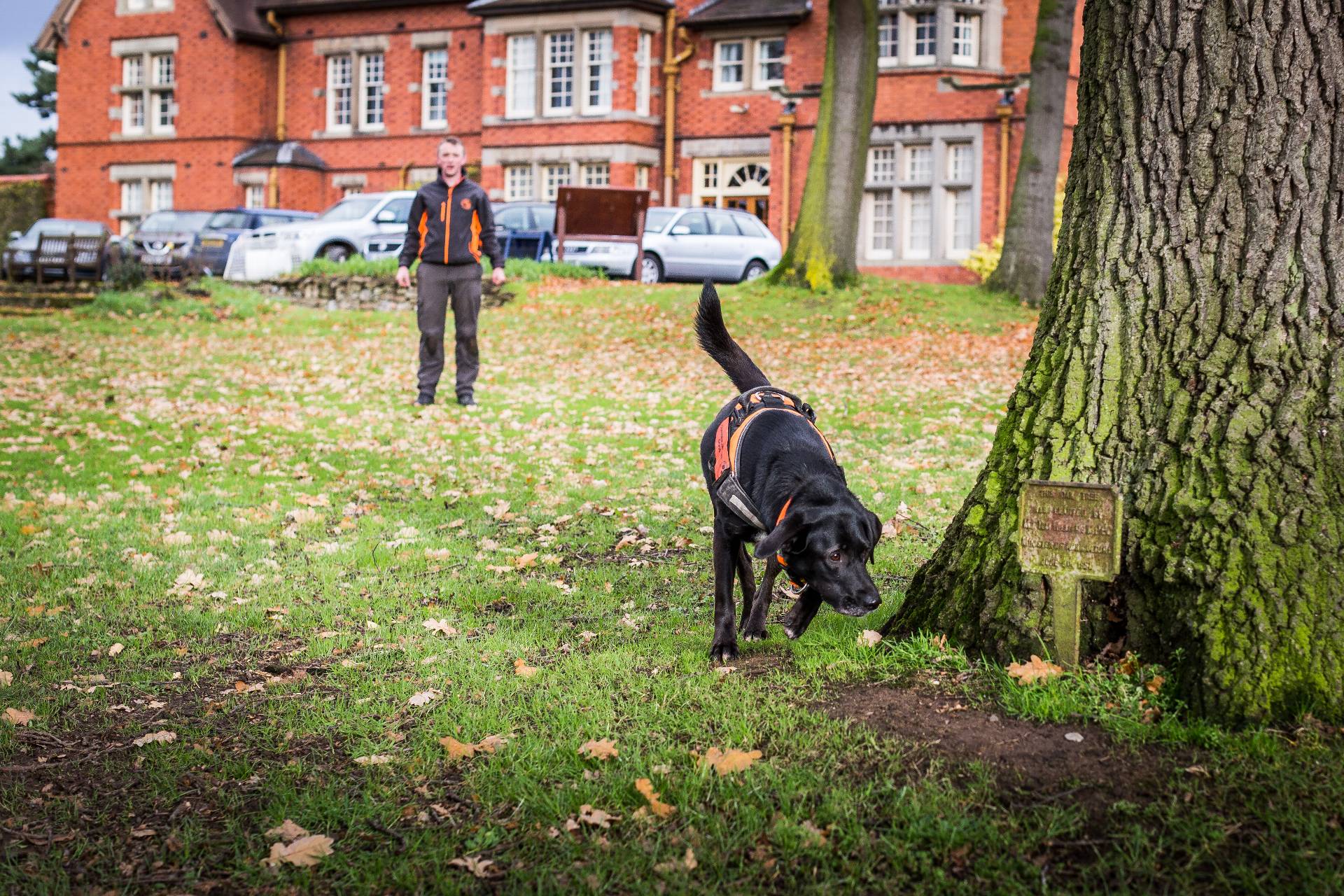
The dogs were brought onto campus and their skills were demonstrated. We watched as Rocky was detecting the newt, he had his head low to the ground and paced around until he found it, homing in on the scent. When he did, he pointed with his nose and glanced at the handler to indicate he had found it. Rocky then positioned himself so that the newt was between his front paws. One of my fellow students commented: “I liked Rocky, I’d love to adopt him. I was happy that we could interact with the dogs and that they we’re very friendly”
Flash, the liver Cocker Spaniel, is trained to find ivory which has become illegal to export in countries like Gabon. The Elephants and Rhinos that produce this valuable substance are endangered due to poaching. Stopping traders passing the boarders with ivory will eventually deter people from killing and taking the ivory of these magnificent creatures. “I enjoyed watching Flash because he was so quick to pick up on the Ivory which a human search team would have taken hours to find.”
Sasha, the black and white Labrador Cross, is trained to detect bats. The effects of wind turbines on bats have been studied closely by conservationists but Sasha can detect for any dead bats found near the turbines. These bats are no more than 5cm and can be very difficult to see but again, with the dogs, the work becomes simpler. The bodies of bats can then be examined, recorded and more research can be done.
It was incredible to watch these dogs at work, how they locked on to the scents and were able to indicate to the handler, Aran, exactly where the substances were. The reward for doing excellent work is playing fetch with a ball.
Thank you to Aran and his team of dogs for your interesting talk and showing us the amazing talents of the canines and their value to conservation work. We hope they return soon!
Related Posts
Agricultural Autonomy Institute joins Harper Adams University's 125th anniversary celebrations
A leading American expert in agricultural autonomy has paid tribute to Harper Adams University as it marks its 125th anniversary.Dr Alex Tho …
Posted 22 October
 Sky's the limit: Helen joins MP's fundraising parachute jump
A charity skydive by a Harper Adams University Business Development Consultant has helped raise more than £16,000 for a new cancer cen …
Posted 21 October
 From dairy farm - to farm vet
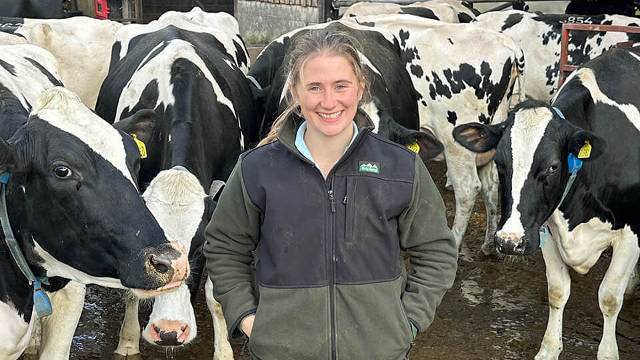
Growing up on a dairy farm played a huge part in shaping Harriet Brimacombe’s ambition to become a vet. Now, as she prepares to …
Posted 20 October
 Listen: Archers anniversary marked with future of farming discussion on BBC radio
With BBC Radio Four marking the 75th anniversary of the Archers this year, Farming Today has taken the opportunity to look forwards this wee …
Posted 16 October